Calendar
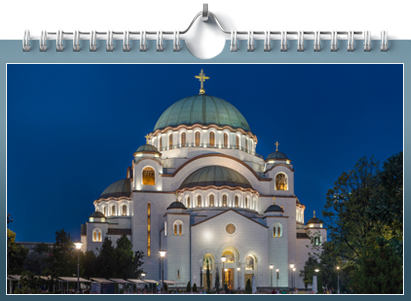
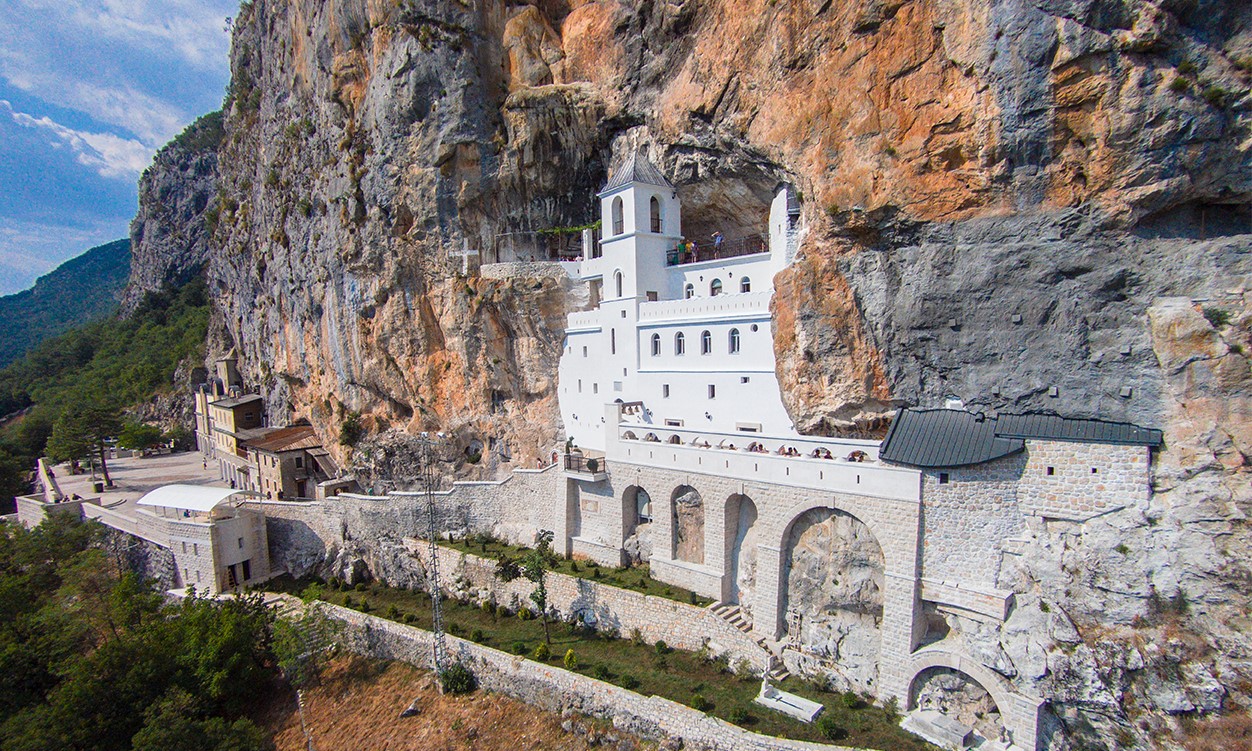
A missionary parish of the Serbian Orthodox Church serving the faithful
of
Halifax and Atlantic Canada.
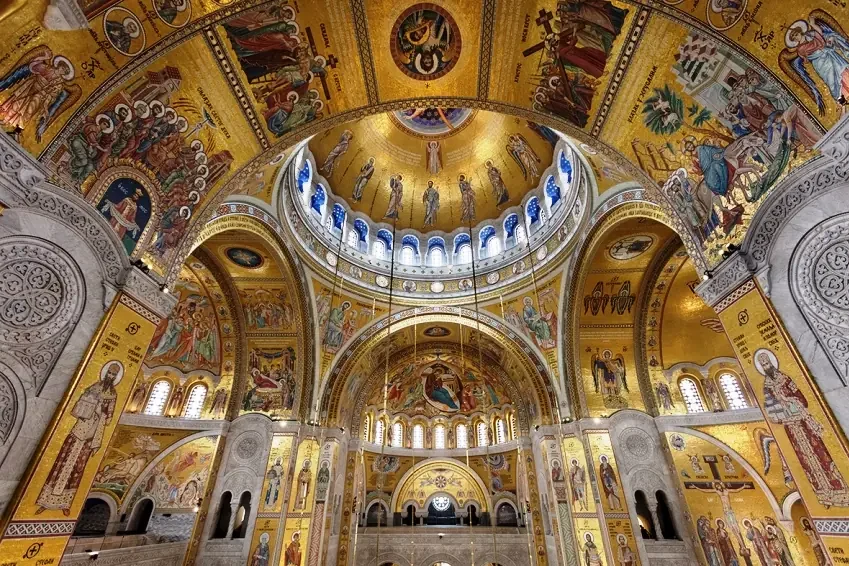
Join us for services and celebrations
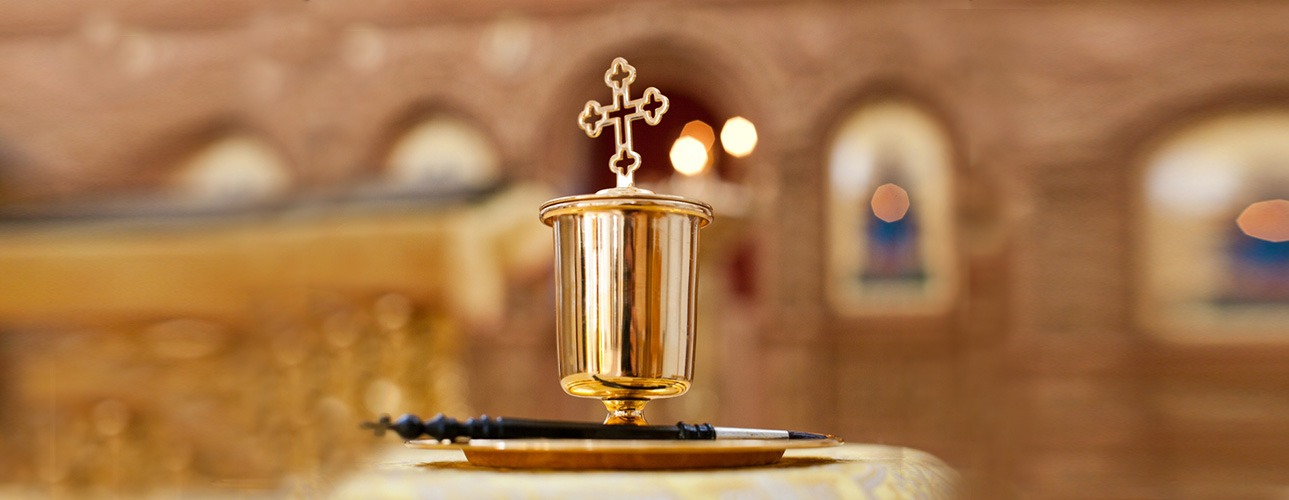
Donations help preserve our community
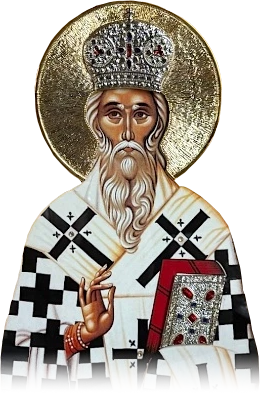
Saint Basil of Ostrog Parish is a missionary community gathered around the Holy Eucharist, prayer, and fellowship. Though our Serbian Orthodox presence in Halifax is small, we welcome everyone who seeks Christ, whether you are Orthodox, exploring the faith, or simply visiting.
Services are celebrated in a mix of Serbian and English, with the aim that all can participate. We share the rich liturgical life of the Orthodox Church and the traditions of our people in a warm, family-like atmosphere.
“Your generosity today helps our church share God’s love in powerful ways. Every gift, no matter the size, becomes a blessing that reaches far beyond these walls. When we give, we partner with God in transforming lives and strengthening our community. Thank you for sowing seeds of hope and faith through your offering. Our God multiply your kindness and return it to you abundantly.”
You can donate securely through Interac E-Transfer using the email below:
Please include your full name and message in the note if you need a tax receipt.
You can donate securely online using PayPal or a credit card:
PayPal accepts Visa, Mastercard, American Express, and PayPal accounts.
With love in Christ, Fr. Đurađ Kojić
Dear brothers and sisters,
The Nativity Fast is approaching, a blessed time when the Church summons each of us to silence our hearts, to stand before God and to prepare ourselves for the holy mystery of Christ's Nativity. Fasting is not simply just abstaining from food. Rather, fasting is the transformation of a person, the gathering of thoughts, sobriety of heart and a return to life according to the Gospel. Fasting is a path that leads us to peace, repentance, humility and joy in Christ. As your priest, I would like to convey to you, in a pastoral and fraternal way, the teachings of the Church on fasting, confession, Holy Communion and belonging to a parish.
What fasting is:
Saint Basil the Great says: “True fasting is a turning away from evil.”
What fasting is not:
The Lord says: “your Father who sees in secret will Himself reward you openly.”
-- Alleviation of fasting --
The Church never asks for the impossible. Fasting is not absolute. The Church knows that everyone has their own level of strength, health, age, and circumstances. Each Christian has their own measure of fasting, and we seek that measure through conversation, prudence, and blessing. Anyone who is sick, undergoing therapy, or under a heavy burden should come forward for a conversation and blessing. The goal of fasting is not to break a person, but to heal them. According to the holy and established practice of our Church, children under the age of seven do not fast strictly, nor do they necessarily confess, but it is very useful for them to come to church, to talk with a priest, to learn prayers and to feel the joy of belonging to the Church from a young age. Children aged seven and older do not have to endure the same measure of fasting as adults, but it is good for them to talk with a priest, accompanied with their parents or independently, to learn the meaning of fasting and to gradually accept fasting as part of their Christian life. The measure of fasting for children is always determined with prudence, love and in accordance with their age and spiritual growth.
-- Confession – the heart of fasting --
Confession is a return to God. It is the moment when the soul is relieved, when the burden of sins is lifted and when a person feels God's closeness again. Saint John Climacus writes: "Repentance is the renewal of baptism." It is neither spiritual nor blessed to go through Lent without a sincere confession. It is even less spiritual, and irresponsible to approach the Holy Chalice without repentance.
-- When to Confess --
Confession can be made before or after every service or at any day and time as agreed with the priest, and in accordance with your availability and obligations. It is not good to confess once a year. It is not good to approach Communion without confession. It is not spiritually beneficial nor ecclesiastically blessed to wander around other parishes without a blessing or real need to do so. It is not good to put your own interpretations above the teachings of the Church.
-- Holy Communion – the greatest sacrament --
Holy Communion is not a habit, not a custom, and not a ritual. Holy Communion is the Lord Christ Himself. The Apostle Paul warns: “ Whoever, therefore, eats the bread or drinks the cup of the Lord in an unworthy manner will be answerable for the body and blood of the Lord.” “ For this reason many of you are weak and ill, and some have died.” Saint John Chrysostom says: “For our God is a consuming Fire, and they, therefore, who with faith and fear draw near to the God and King and Judge of us all, shall burn and scorch their sins; and It shall enlighten and sanctify their souls. But It shall burn and scorch with shame, the souls and bodies of them that draw near with unbelief.” And he prays: “May the communion of Thy holy Mysteries be neither to my judgment, nor to my condemnation, O Lord, but to the healing of soul and body.” Saint Symeon the New Theologian warns: “Whoever approaches without the fear of God and without repentance does not receive Christ, but judgment upon himself.” The goal of the Church is not to frighten a person, but to make them aware that they should approach the Sacrament with the fear of God, faith, and love.
-- On Regular Fasting and Frequent Communion --
Orthodox Christians fast every Wednesday and Friday (except for the loose weeks), as well as through the four great fasts in the year. Those who live per the order of the Church, observe these fasts and regularly confess, with the blessing of the priest, may receive communion more regularly and frequently, even at every Holy Liturgy. This is the ideal to which we should strive: a life of repentance, in peace and in frequent, blessed access to the Holy Chalice. Also, the priest himself, by grace and as the one presiding over the Eucharist, receives communion at every Divine Liturgy. The priest regularly confesses with the blessing of the bishop or confessor, in humility and repentance, each in his own place, respecting the Church order.
-- Basic food abstinence during fasting --
The basis of fasting in terms of food is abstinence from fatty foods, that is: meat, milk, cheese, eggs and everything that is of animal (warm-blooded animals) origin. This is the measure of the Church, and each Christian takes a blessing for his own measure of fasting, in accordance with his strength, health, age and circumstances.
-- The Church as the Body of Christ - each member in its place --
The Holy Apostle Paul teaches that the Church is one Body of Christ and that each of us is a member individually: “If the whole body were an eye, where would be the hearing? If the whole were hearing, where would be the smelling?” “But now God has set the members, each one of them, in the body just as He pleased.” “ And the eye cannot say to the hand, 'I have no need of you'; nor again the head to the feet, 'I have no need of you.'” “Now you are the body of Christ, and members individually.” In the Church, no one is superfluous and no one is rejected. But each member has its own gift, its own service and its own responsibility. Thus we preserve order, unity and love, for only thus does the Body of Christ breathe with one Spirit.
-- The measure of fasting and monastic rules --
Monastic life has its own measure and blessing. Daily family and work life has another measure. Not everything from the monastery can be transferred to worldly life, nor can the worldly rhythm be brought into the monastery. We have a choice, those who want to live in a monastery go there, and those who do not want to stay in the world. The Lord knows our obligations, work, burden and worries and does not ask for the impossible. God gives everyone their measure in humility and blessing.
-- Gratitude - the foundation of Christian life --
The Christian life begins and ends with gratitude. We are called to offer God silent thanksgiving daily for all the gifts He gives us: for life, for health, for family, for peace, for food, and for every moment of mercy. Gratitude is the first prayer of a Christian. Holy Scripture teaches us: “In everything give thanks.” When gratitude becomes our path, the soul calms down and recognizes that everything we have comes from God.
-- Parish, Church, and Our Order --
Being a member of the Church is a free choice, but also a holy calling. The Church has an order that goes from above — from Christ, through the bishop to the priest. Obedience to the priest is not following a person, but respecting the order of the Church and life in unity with the Holy Tradition, and in the interest of salvation and preservation of the Church, that is, the community. Obedience in the Church is not slavery or an "option", but a love that preserves unity. A Christian belongs to his parish. Here they confess, here they partake of the Holy Communion and here they grow spiritually. The Holy Apostle Paul teaches us: "Bear one another's burdens, and so you will fulfill the law of Christ."
-- A call to fasting --
I beg you, brothers and sisters, to adhere to the Church order, to avoid following individual interpretations, but to seek blessings, to avoid competing with one another in severity of fast or impose our measure on others, but to see fasting as a medicine for the soul and a gift from God. May this fast be a time of peace, humility, sincere confession, gratitude, forgiveness and joyful anticipation of the Nativity of Christ, who is the head of that which we are a voluntary part of. I am at your disposal for prayer, confession, conversation and any spiritual support.
With love in Christ, Fr. Đurađ Kojić
A few of the main ways we gather and serve.
Regular Divine Liturgy and feast-day services, with confession and other sacraments as arranged with the priest.
Coffee hour and meals after services, feast-day celebrations, and opportunities to share in one another’s lives.
The Circle of Serbian Sisters “Holy Martyrs Vera, Ljubav and Nada and their Mother Sophia” supports the liturgical and charitable life of the parish.